Urbania on Ghat Roads - Munnar, Thekkady & Wayanad Driving Guide
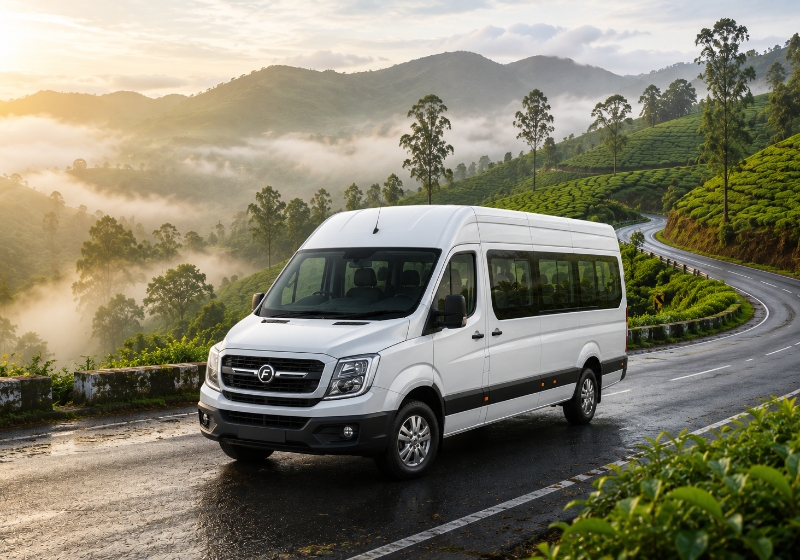
Yes. The Force Urbania is one of the better-suited vehicles for Kerala's hill routes to Munnar, Thekkady and Wayanad. Its independent front suspension, monocoque (car-like) body construction, capable diesel engine and effective air-conditioning during long climbs make it comfortable on the tight hairpin bends and steep gradients that define these ghat sections. For groups of 10 to 17 travelling together, it offers a smoother, more stable ride than older minibuses or a convoy of small cars.
At Avancer Travel Solutions, we have run Urbania trips on these routes since the vehicle arrived in Kerala, and our drivers have driven the Munnar, Thekkady and Wayanad ghats for years before that. This guide explains why the Urbania handles these roads well, what each route involves, and how to keep your group comfortable from start to finish.
Why the Urbania Handles Ghat Roads Well
Ghat roads punish a vehicle in specific ways: constant steering input on hairpins, repeated braking on descents, body roll on cambered bends, and sustained engine load on climbs. The Urbania's design addresses each of these.
- Independent front suspension. Unlike rigid-axle vans, the Urbania's front wheels move independently. On a broken, uneven ghat surface this keeps the ride flatter and reduces the jolting that triggers motion sickness on winding roads.
- Monocoque body. The Urbania uses a unitary car-like body rather than a body-on-ladder-frame truck chassis. This lowers the centre of gravity and reduces body roll, so the van feels more planted through tight bends.
- Adequate power for climbs. The turbocharged diesel engine produces enough low-end torque to pull a full load of passengers and luggage up long gradients without straining, which means fewer gear-hunting moments and a calmer ride.
- Air-conditioning that holds up on climbs. Sustained low-speed climbing is when many older vehicles lose cooling performance. The Urbania's AC keeps the cabin comfortable even when the engine is working hard, which matters on the warmer lower stretches of these routes.
- High seating and large windows. Passengers sit higher with a clear forward and side view. A clear horizon view is one of the most effective ways to reduce motion sickness on winding roads.
These are the same reasons groups increasingly choose it for hill trips. You can see the full range and current rates on our Urbania rental price page.
The Munnar Route — 36 Hairpins and a Long Climb
The classic Kochi-to-Munnar drive runs roughly 130 km and takes about 4 to 4.5 hours, depending on stops and traffic. The character of the road changes sharply once you pass Adimali and begin the main ghat ascent toward Munnar, which winds up through a well-known series of sharp hairpin bends — often counted at around 36 — as the road climbs into the tea country.
What to expect on this route:
- The first half is easy. The stretch from Kochi to Neriamangalam is mostly flat to gently rolling. Most travellers feel no discomfort here.
- The hairpin section is the test. From Adimali upward, the bends come quickly and the gradient steepens. This is where the Urbania's suspension and a driver who knows the road make the biggest difference.
- Viewpoints and waterfalls. Cheeyappara and Valara waterfalls fall on this route and make natural rest stops — useful both for photos and for letting anyone prone to motion sickness step out for fresh air.
- Weather changes with altitude. Munnar sits at around 1,600 m. Mist and light rain are common on the upper ghat even when Kochi is sunny.
For a full route breakdown, itinerary ideas and indicative fares, see our dedicated Urbania rental Kochi to Munnar page.
The Thekkady Approach — Spice Hills and Gentle Gradients
The drive to Thekkady (Periyar) from Kochi covers roughly 145 km over about 4 hours. The ghat section here is generally less severe than Munnar's hairpins but longer and more continuous, climbing through the spice-growing hills around Kumily.
- Steady climbing rather than sharp switchbacks. The road gains height more gradually, which most passengers find easier on the stomach.
- Narrow village stretches. Around Vandiperiyar and Kumily the road narrows and passes through busy market areas. This is where local driving experience matters more than raw vehicle capability.
- A good route to combine. Many groups pair Thekkady with Munnar over a two- or three-day trip, which suits a single Urbania booking with the same driver throughout.
Route details and pricing are on our Urbania rental Kochi to Thekkady page.
The Wayanad Approach — Steep Ghats and Tighter Bends
Wayanad is reached from the Kozhikode (Calicut) side, most commonly via the Thamarassery ghat, a steep section with a tight cluster of hairpin bends climbing onto the plateau. From Kochi, the drive is longer — roughly 280 km and 6 to 7 hours — so groups often start early.
- The Thamarassery ghat is demanding. The bends are tight and the gradient is steep over a short distance. A composed driver and a stable vehicle make this section far more comfortable.
- Cooler plateau, frequent mist. Once on top, Wayanad's roads are calmer, but morning and evening mist can reduce visibility.
- Plan the longer drive. Because the distance is greater, build in a meal stop and keep the overall day relaxed rather than rushed.
See the full plan and indicative cost on our Urbania rental Kochi to Wayanad page.
Why Driver Expertise Matters More Than the Vehicle
A capable vehicle only delivers a smooth hill trip in the hands of a driver who knows the road. On ghat sections, the difference shows in small, constant decisions: choosing the right gear before a climb rather than mid-bend, braking early and smoothly on descents, reading oncoming traffic on blind hairpins, and pacing the drive so passengers do not feel thrown around.
Our drivers have run these specific routes repeatedly, which means:
- They know where the tightest bends, narrow stretches and common bottlenecks are.
- They time rest stops at the points where passengers most need them.
- They drive smoothly and predictably, which is the single biggest factor in preventing motion sickness.
- They know the reliable viewpoints, tea estates and photo stops along the way.
Comfort and Motion-Sickness Tips for Ghat Travel
Even on a stable vehicle, winding roads affect some travellers. A few simple measures help most groups:
- Seat sensitive passengers toward the front. Forward seats with a clear view of the road reduce the sensory mismatch that causes nausea.
- Eat light before the ghat section. A heavy meal just before the hairpins is the most common cause of discomfort.
- Keep airflow moving. Cracking a window or directing AC vents helps anyone feeling queasy.
- Take the rest stops. A five-minute break at a waterfall or viewpoint resets most travellers.
- Carry basic remedies. Over-the-counter motion-sickness tablets, taken before the climb, help passengers who are prone to it. (Follow the package guidance.)
- Look ahead, not at phones. Reading or screens during the hairpin section makes nausea worse.
Best Seasons to Travel the Hill Routes
Kerala's hill stations are at their best outside the heaviest monsoon weeks. As a general guide:
- October to March is the most comfortable window — clear skies, cool air and the best views across tea estates and forests.
- April to May is warm in the plains but pleasant on the higher ghats, and quieter than peak season.
- June to September (monsoon) brings lush, dramatic scenery but also heavy rain, occasional landslips on ghat sections, and reduced visibility. Travel is still possible and beautiful, but plan for a slower pace and check road conditions.
Safety on Kerala's Ghat Roads
Ghat travel is safe when handled sensibly. The practices that matter most:
- Start early. Daylight driving on hairpins is far safer than driving these roads after dark, when mist and poor lighting reduce visibility.
- Maintained vehicles only. Brakes, tyres and the cooling system take real load on the ghats, so the vehicle's condition is not negotiable.
- Respect the weather. During heavy monsoon spells, ghat sections can be affected by water flow and the occasional slip. A driver who knows the route will adjust the plan accordingly.
- Don't rush the descent. Smooth, controlled descents protect both the brakes and the passengers' comfort.
Frequently Asked Questions
Can an Urbania handle the Munnar hairpin bends fully loaded?
Yes. With a full group and luggage, the Urbania has enough torque to climb the Munnar ghat comfortably. The key is an experienced driver who selects the right gear and paces the climb smoothly.
Which is the toughest of the three ghat routes?
For sheer steepness over a short distance, the Thamarassery ghat to Wayanad is the most demanding. Munnar has the most hairpins in sequence, while Thekkady's climb is the gentlest of the three.
How much does an Urbania for a hill trip cost?
Indicative outstation rates start at around ₹9,000 per day for a 10-seater, ₹10,000 for a 12-seater and ₹11,500 for a 17-seater, with extra kilometre charges of roughly ₹28–₹33 depending on the vehicle. For exact, current pricing see our Urbania rental price page.
Is the Urbania better than booking several cars for a group?
For groups of 10 or more, a single Urbania keeps everyone together, simplifies the trip and is usually more comfortable on winding roads than a convoy of small cars. Browse the options on our Urbania rentals page.
Plan Your Ghat-Road Trip With Avancer
Whether you are heading to the tea gardens of Munnar, the spice hills of Thekkady or the forests of Wayanad, a well-driven Urbania turns a tiring hill drive into a comfortable one. Avancer has run these routes since 2012, with drivers who know every bend. Explore options and request a quote on our Urbania rental Kerala page, or call us to plan your itinerary and lock in your dates.